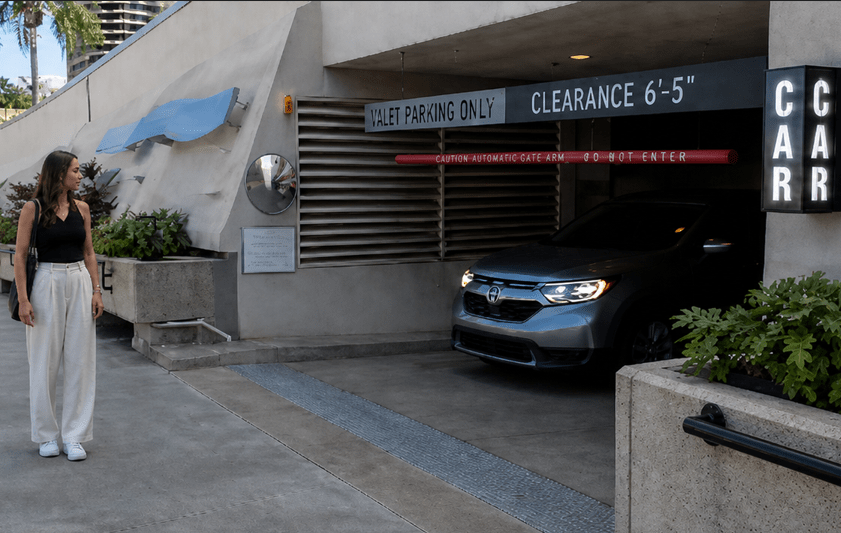


Fulfillment centers and warehouses are designed for speed, but the same aisles often carry forklifts, delivery vehicles, pedestrians, and autonomous mobile robots (AMRs). When those movements overlap without a clear right-of-way, a small visibility problem can quickly become an injury, equipment collision, or costly shutdown.
A safer facility does more than post warning signs. It combines traffic control, physical separation, detection, and clear operating rules so every person and machine knows when to stop and when to proceed. The following four strategies can help reduce accidents, protect employees and visitors, limit liability, and keep material moving efficiently.
1. Control vehicle movement with red and green traffic lights
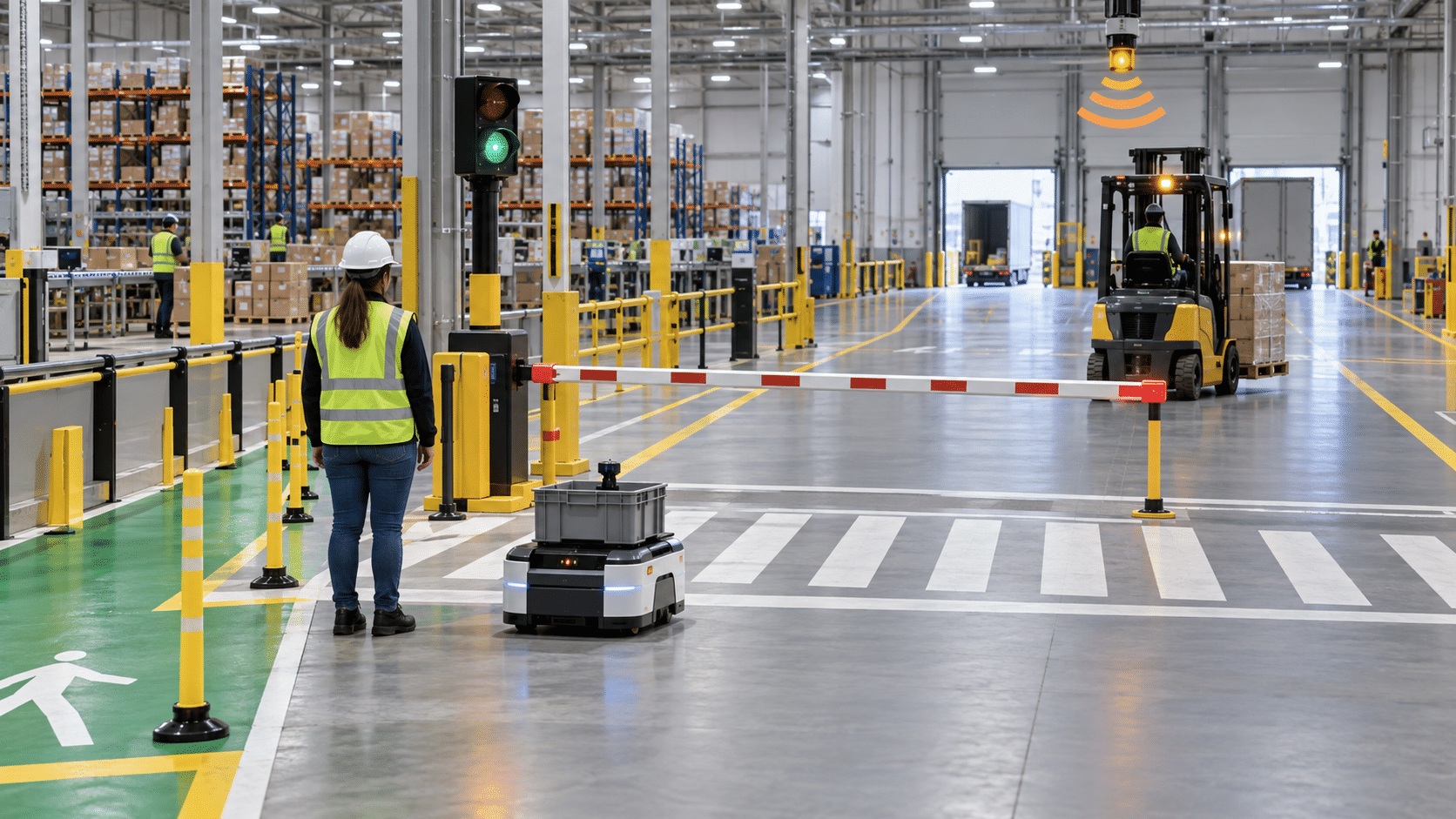
Industrial red/green traffic lights establish an unmistakable right-of-way at loading docks, narrow aisles, ramps, blind intersections, and one-way passages. They can operate on a timed sequence when traffic patterns are predictable or respond to sensors when demand changes throughout the day.
Timed control works well when each direction needs a fixed interval. Sensor-controlled operation is better when one lane is usually quiet or when vehicles arrive unpredictably. A properly designed sequence can hold one approach on red, verify that the conflict area is clear, and then release the opposing approach on green. Warning signs, audible alerts, or barrier gates can be added when the risk requires a more positive form of control.
Operational benefit: Drivers spend less time guessing who has the right-of-way, while managers gain a repeatable traffic pattern that can reduce near misses and congestion.
2. Delineate pedestrian and vehicle traffic
Painted walkways are an important first step, but paint alone does not create physical separation. Use high-contrast floor lines, directional arrows, crossing markings, flexible delineator posts, railings, curbs, or protected sidewalks to make the intended routes obvious.
Design pedestrian paths so employees do not have to step into a forklift lane to pass stored material, charging stations, or work cells. Keep crossings as short as practical and locate them where both the pedestrian and vehicle operator have adequate sight distance. At blind corners, add mirrors, detection, and active warnings instead of relying on awareness alone.
Operational benefit: Defined routes reduce unpredictable movement, make safety expectations easier to train, and help visitors navigate the facility without entering active vehicle lanes.
3. Protect crossings used by people and autonomous robots
Modern fulfillment centers increasingly mix pedestrians, forklifts, tuggers, carts, and AMRs. A crossing should account for every user—not just people. Sensors can detect an approaching vehicle or robot and activate a red signal, illuminated warning sign, audible alert, or barrier gate before it reaches the conflict point.
Barrier gates are especially useful where a simple light may not provide enough protection. A gate can hold pedestrians or robotic traffic until the vehicle phase is complete. The control logic should include a clearance interval so the crossing is fully empty before the next movement receives permission to proceed.
For robotic routes, coordinate the traffic-control system with the robot fleet whenever possible. Where direct integration is not practical, independent presence and motion sensors can provide a reliable layer of protection.
Operational benefit: Controlled crossings create predictable interactions among people, vehicles, and robotic equipment, reducing collision exposure without unnecessarily stopping production.
4. Detect forklifts by size and direction of travel
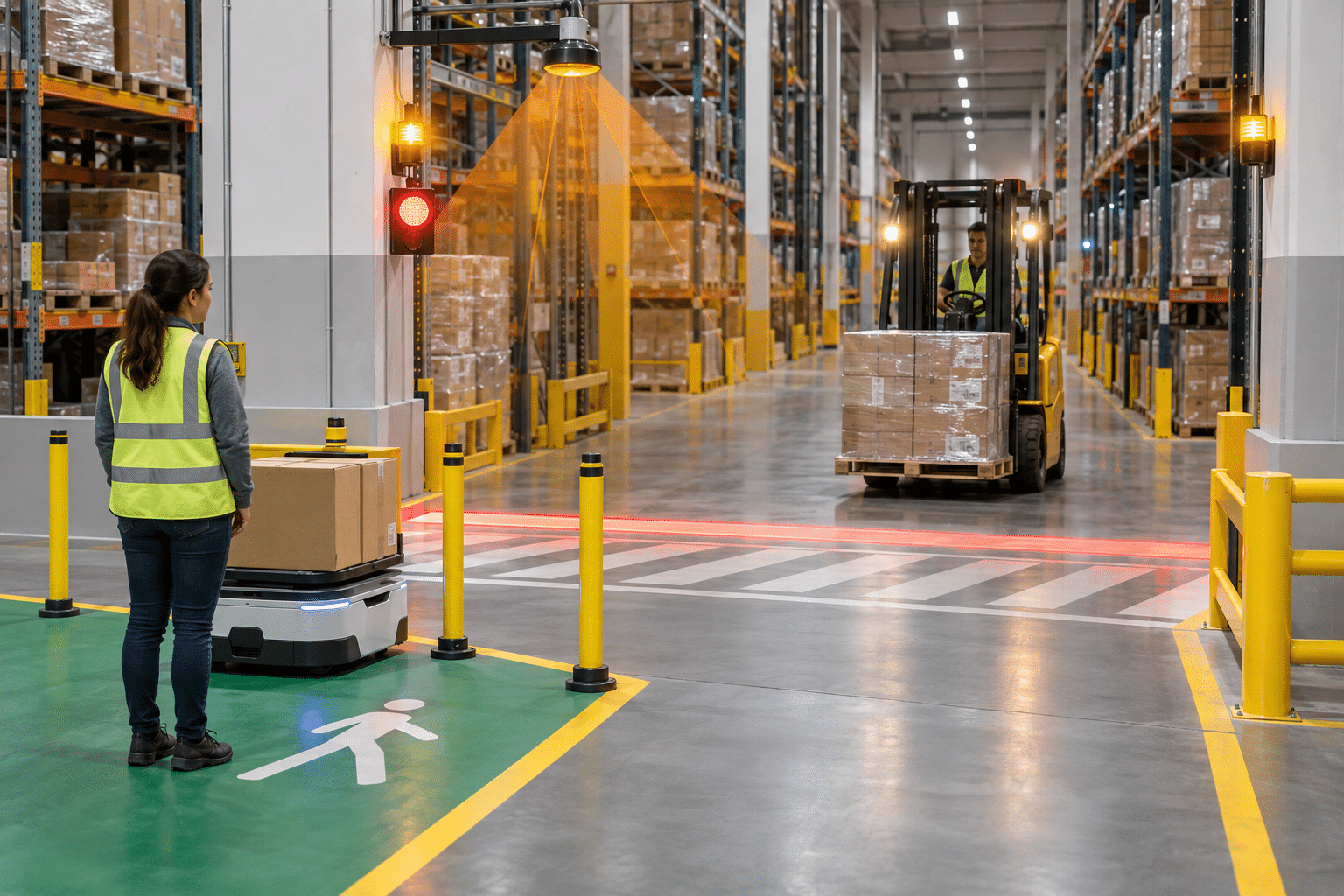
Not every moving object should trigger the same warning. Intelligent motion detection can distinguish meaningful vehicle movement from smaller objects and can evaluate direction of travel. This allows the system to warn only when a forklift is approaching a conflict zone, rather than every time motion occurs nearby.
At a blind aisle intersection, for example, a directional detector can activate an amber beacon or warning sign for the cross aisle while leaving the opposite direction unaffected. In higher-risk areas, the same detection event can change a traffic signal to red, activate an audible message, or lower a barrier gate.
Detection zones should be tested using the actual forklifts, travel speeds, loads, and aisle geometry in the facility. Mounting height, reflective surfaces, rack movement, and adjacent work activity can all affect performance.
Operational benefit: Targeted warnings reduce nuisance alarms, improve employee trust in the system, and provide earlier notice of genuine vehicle hazards.
A practical five-step implementation process
- Map the traffic: Identify vehicle routes, pedestrian paths, robot lanes, blind corners, loading areas, and repeated near-miss locations.
- Rank the conflicts: Prioritize crossings by speed, traffic frequency, visibility, stopping distance, and the severity of a potential incident.
- Select the control method: Choose timed lights, sensor-controlled signals, active warning signs, audible alerts, delineation, or barrier gates based on the actual risk.
- Test the complete sequence: Verify detection zones, clearance timing, fail-safe behavior, and visibility from every approach before placing the system into normal service.
- Review and improve: Observe employee behavior, investigate near misses, and adjust timing or detection as operations change.
Design the system around the facility
There is no single traffic-control layout that fits every warehouse. A high-speed forklift aisle, a pedestrian break-room crossing, and an AMR charging area require different responses. The strongest designs combine passive measures—such as paint and delineators—with active measures that detect traffic and provide a clear, timely instruction.
Pass Signs can help develop an engineered warning and control system using traffic lights, intelligent sensors, illuminated signs, audible alerts, and barrier-gate control. Explore our engineered traffic-control kits or contact us to discuss the traffic patterns and conflict points in your fulfillment center.