

School parking lot safety depends on more than painted arrows and posted speed limits. During arrival, dismissal, athletic events, and after-hours programs, vehicles, buses, staff, students, and families can converge in the same space within minutes. A safer layout makes conflict points visible and gives drivers and pedestrians clear, timely warnings before they enter them.
This guide outlines a practical way to review a school, childcare center, community campus, or education-adjacent property. It focuses on traffic flow, pedestrian visibility, detection, and warning communication—elements that can support a broader site-safety plan.
Start with the moments when the site is hardest to manage
A parking area may look simple at midday and become completely different during a ten-minute dismissal window. Begin by observing the site during its busiest periods. Note where vehicles queue, where buses turn, where families cross outside marked paths, and where parked vehicles block sightlines.
Common conflict points near schools
- Crosswalks between parking rows and entrances
- Parent pickup lanes beside pedestrian waiting areas
- Driveways that cross a sidewalk
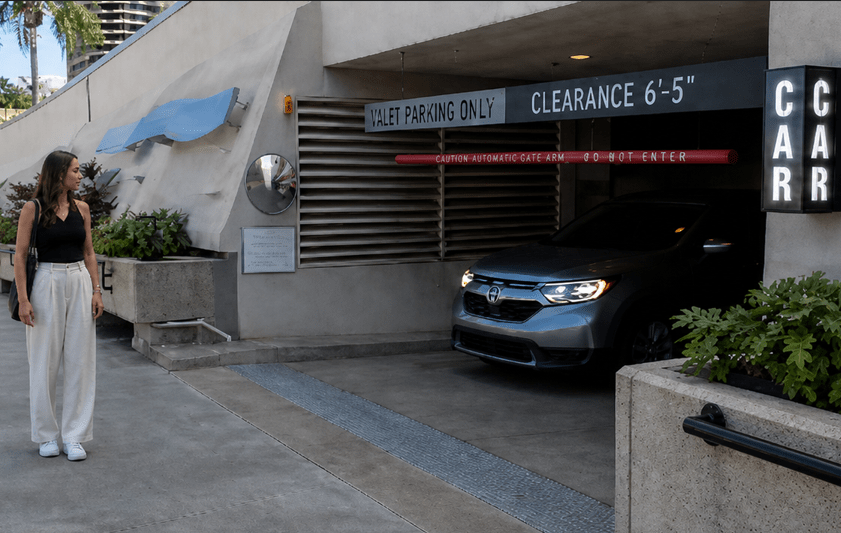
- Garage or service exits with limited visibility
- Bus loops that share a general traffic lane
- Blind corners near buildings, fences, or landscaping
- Staff parking exits used during student dismissal
- After-hours event traffic in low light
Separate pedestrian and vehicle decisions
Drivers should not have to decide where to turn, watch for an opening, read a complicated sign, and detect a pedestrian at the same instant. Whenever possible, organize the site so each decision happens in sequence. Use clear lane guidance before a crossing, preserve sight distance, and place warning devices where a driver has time to recognize and respond.
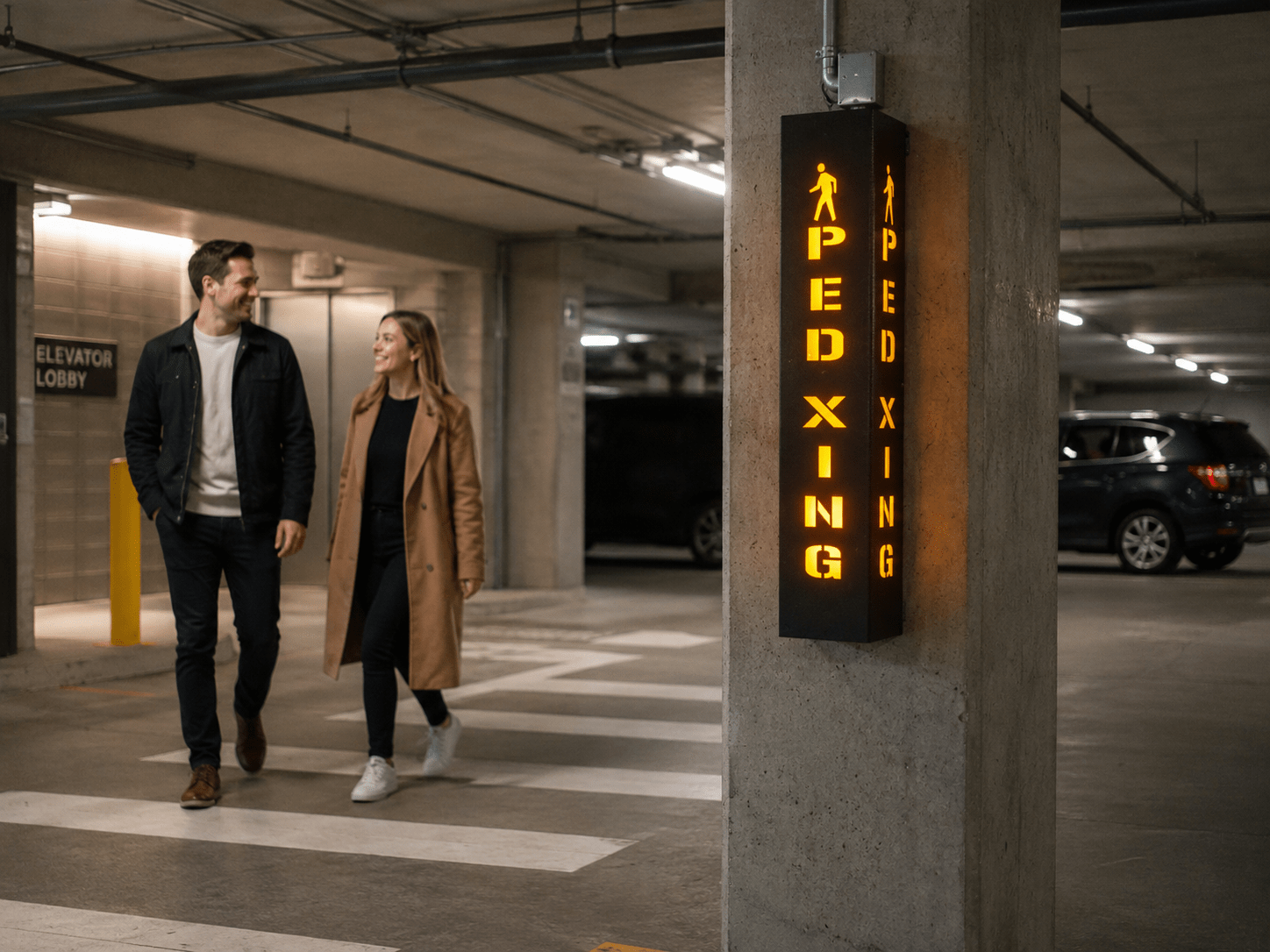
Pedestrian routes should be equally understandable. A well-positioned crossing, consistent walkway markings, and visible destination reduce the temptation to cut between moving vehicles. Where a path crosses an active lane, an illuminated warning sign can provide a stronger visual cue than a passive sign alone.
Use active warnings where conditions change
Some school-zone hazards are present only when a person or vehicle enters a specific area. Active warning systems are useful in these locations because the message appears when it is relevant. A detector can identify movement or presence, then activate a sign, traffic light, or audible alert for a programmed period.
For example, a pedestrian detection system can warn drivers when someone approaches or enters a designated crossing. A vehicle-detection system can warn pedestrians when a car is leaving a garage, service drive, or concealed ramp. The goal is not to add more visual clutter; it is to deliver the right warning to the right person at the right time.
Match the sensor to the application
Detection technology should be selected around the environment. Radar and motion detectors can work well where pavement cutting is undesirable. Loop detectors can provide reliable vehicle detection at controlled lanes. Narrow-area sensors can help limit activation from nearby traffic. Review detection distance, direction, mounting location, weather exposure, and the possibility of unwanted activations before choosing a device.
Explore available parking safety sensors or ask for help selecting a detector for a specific campus layout.
Plan for arrival, dismissal, and after-hours use
A good school parking lot safety plan should work under more than one operating condition. Morning traffic may be orderly and supervised, while evening events can introduce unfamiliar drivers, darkness, and different parking patterns. Consider how the same driveway or crossing behaves during:
- Morning student arrival and afternoon dismissal
- Bus loading and unloading
- Staff shift changes
- Athletic practices and evening events
- Weekend community programs
- Maintenance and delivery windows
Lighting, sign visibility, and detection coverage should remain effective during each condition. If a system uses timed outputs, confirm the warning remains active long enough for slower pedestrians, groups of students, or vehicles moving through a long crossing zone.
School parking lot safety review checklist
- Observe the site during peak arrival and dismissal
- Identify every vehicle–pedestrian conflict point
- Confirm signs are visible above parked vehicles
- Remove or relocate sightline obstructions
- Check warning visibility in daylight and darkness
- Test detection from realistic approach paths
- Verify warning duration for the full crossing
- Document periodic inspection and maintenance
For facilities that need a ready-to-configure option, the Pedestrian Crossing 3607 warning system combines active signage with selectable detection and control components. The system can be adapted to the crossing layout rather than forcing every property into the same configuration.
Build a system around the actual site
Schools and education-adjacent properties differ in traffic volume, age groups, supervision, lane geometry, and operating hours. A useful warning system starts with those real conditions. Photos, approximate distances, mounting locations, power availability, and a simple traffic sketch are often enough to begin a productive design conversation.
Need help planning a safer crossing or driveway?
Parking Alert Signs can help identify suitable signs, sensors, controllers, and mounting options for your site. Custom messages and system configurations are also available for unusual traffic patterns.